A plastering spray machine changes the labor equation on every wall your crew touches. A five-person manual team spends a full day covering roughly 150 to 200 square meters, and skilled trowel hands are increasingly hard to find at any wage. Fatigue also affects quality, which shows up later as hollow spots and cracks that demand rework. Therefore, contractors who compare manual and machine plastering need to count more than the daily wage. They need to count crew size, output, rework, and how quickly the equipment pays for itself.
TL;DR: Manual plastering needs a five-person crew for a full day to cover 150–200 m². The YG311 reaches a spraying area of up to 150 m²/h, and one operator replaces a team of three or four workers. The savings in labor and rework usually cover the machine cost within a few large projects.
| Parameter | YG311 | YG318 | YG511 | YG711 |
|---|---|---|---|---|
| Capacity | 2–3 m³/h | 3 m³/h | 3–4 m³/h | 3 m³/h |
| Working pressure | 3–6 MPa | 3 MPa | Max 3 MPa | 6 MPa |
| Material ratio | Cement: Sand=1:3 | Water:Ash:Sand=0.7–1:1:3 | Water:Ash:Sand=0.7–1:1:3 | Water:Ash:Sand=0.7–1:1:3 |
| Voltage | 380V/220V | 380V | Diesel engine | 220V |
| Motor power | 4 kW | 7.5 kW | 8 HP / 12 HP | 4 kW + 4 kW mixer |
| Air supply | 2 kW pump | 0.3 m³/min | 0.3 m³/min | 0.4 m³/min |
| Spraying area | 150 m²/h | — | — | — |
| Horizontal distance | — | 60 m | 50–60 m | 60 m |
| Vertical distance | — | 40 m | 30–40 m | 40 m |
| Hopper volume | — | 80 L | 80 L | 100 L |
| Max aggregate | ≤3 mm | ≤12 mm | ≤8 mm | ≤8 mm |
| Feeding pipe | — | 32 mm | 32 mm | 32 mm |
| Total weight | — | 300 kg | 320 kg | 400 kg |
Where Manual Plastering Bleeds Labor Cost: A Plastering Spray Machine Comparison
Manual plastering depends on the trowel hand’s rhythm. A skilled finisher applies mortar in arcs, presses it against the wall, and steps back to check flatness. However, that motion creates uneven compaction. Some zones receive full pressure while adjacent areas get a lighter touch. Consequently, the wall looks flat under a straightedge but hides weak spots that show up as hollow sounds weeks later.
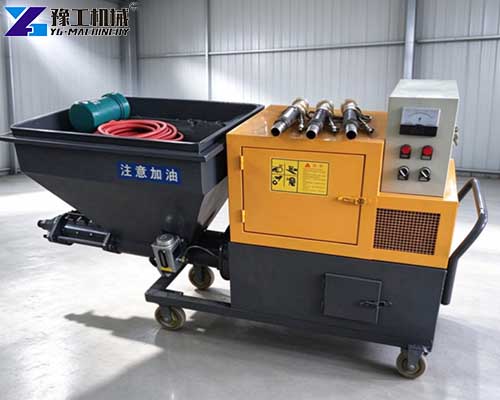
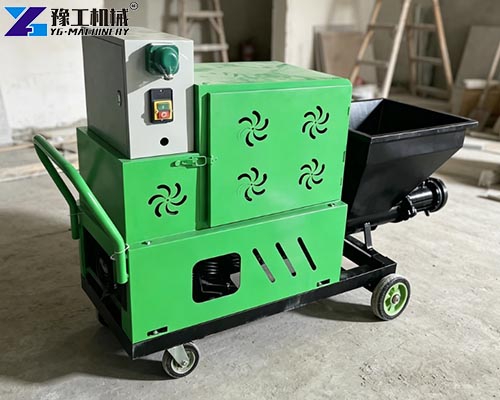
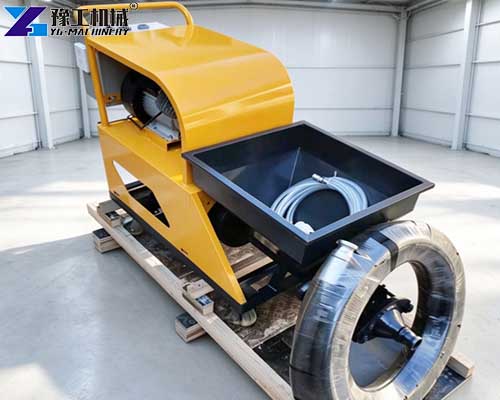
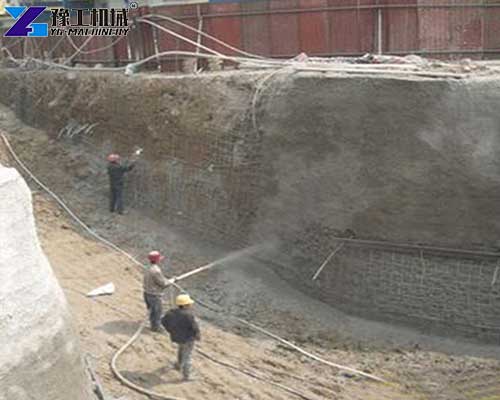
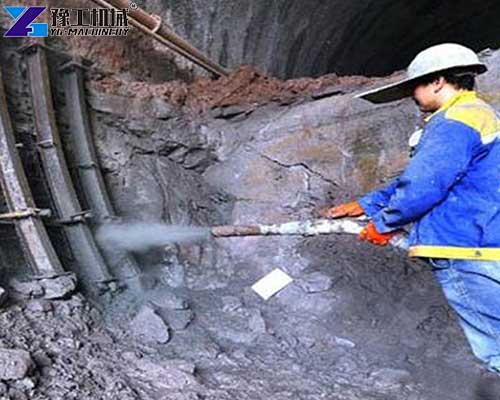
Machine spraying removes the human variable from compaction. The YG311 pushes material through the hose at 3–6 MPa working pressure, and the spray gun deposits mortar with the same force across every pass. Furthermore, the YG311 reaches a spraying area of up to 150 m²/h under proper site conditions. To put that number in perspective, a five-person manual crew working an eight-hour shift typically covers 150–200 m² total. The machine matches their daily output in the first hour and keeps going.
Counting the Crew, Not Just the Wage
A contractor comparing costs usually looks at the daily wage and stops there. That comparison misses the real number. Five trowel hands require coordination, scaffolding moves, and mixing labor. The mixing station becomes a bottleneck when two finishers work the same wall face, and the crew slows each other down. Meanwhile, one operator running the machine keeps spraying while a second worker handles mixing and refilling the hopper. As a result, a two-person machine crew outpaces a larger manual crew on open wall faces, and the gap widens as floor area grows.
Running the Numbers on a 1,000 m² Project
A spray machine for plastering pays for itself when the labor savings from one or two large projects exceed the equipment cost. Take a 1,000 m² wall area as a working example. A manual crew of five covering 150–200 m² per day needs roughly five to seven working days to finish. A machine crew of three, with the YG311 spraying up to 150 m²/h, compresses the same wall area into a much shorter window once mixing, repositioning, and finishing time enter the schedule.
What the Labor Difference Actually Means
The manual crew’s five to seven days translate into five workers multiplied by those days. The machine crew’s shorter schedule translates into three workers for far fewer days. Even before counting rework, the wage difference is substantial. The plaster spraying equipment does not replace skill; it replaces the number of hands needed to cover the same wall area in the same week. Contractors bidding on tight schedules gain the ability to take on more work with the same crew size, which changes the revenue side of the equation, not only the cost side.
Quality Gains That Reduce Rework Cost
Manual plastering quality depends on the finisher’s fatigue level. A crew working a long day applies less consistent pressure in the final hours, and that inconsistency shows up as hollow spots and cracks after curing. Rework means sending a crew back to the same wall, which doubles the labor cost on that section. Therefore, the machine’s quality benefit is not only cosmetic; it shows up on the budget as avoided rework.
Steady Pressure and Uniform Compaction
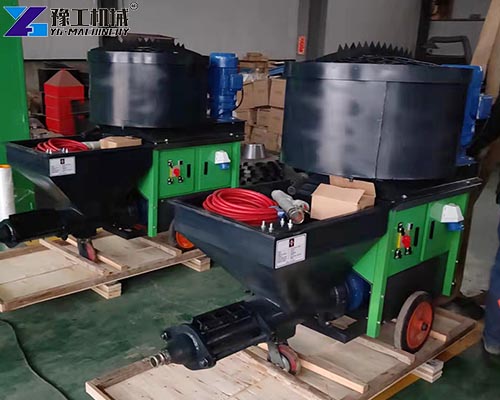
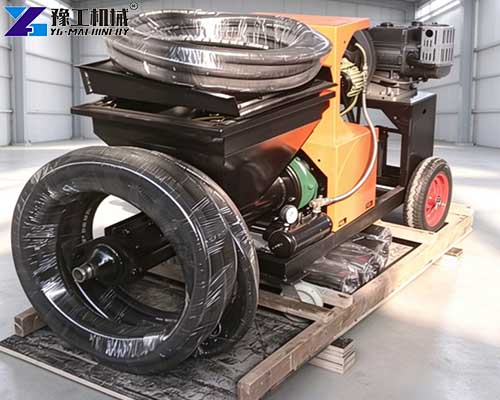
A plaster spraying equipment setup applies mortar at constant pressure, so compaction stays uniform across the entire pass. Meanwhile, the water-cement-sand ratio stays locked at 0.7–1:1:3 on the YG318, YG511, and YG711, which prevents the mix from becoming too dry to bond or too wet to hold shape. As a result, the sprayed wall cures without the delamination that forces crews back with a hammer to test every square meter. On a 1,000 m² project, eliminating one round of hollow-spot patching saves the crew two to three days of rework.
Spray Machine For Plastering: Uniform Coating and Less Secondary Leveling
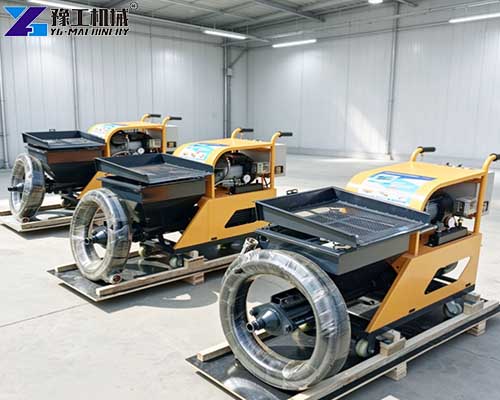
The high-pressure spray produces a consistent layer thickness. This eliminates patches and reduces the need for secondary leveling, which is a direct benefit of machine spraying. Contractors who previously budgeted for a skim coat over the full wall area can redirect that labor to the next project.
The YG311’s 3 mm aggregate limit restricts it to fine-mortar applications. Contractors spraying coarse sand mixes should select the YG318 or YG711, accepting higher machine weight as the trade-off for aggregate tolerance.
Customer Practical FAQ for Plastering Spray Machine
Contractors weighing machine investment against manual crews ask about crew size, output expectations, and how quickly the equipment pays back. The answers below come from our engineering team’s field experience.
A: One operator replaces a team of three or four workers. In practice, one operator plus one mixing hand covers most sites: one operator guides the spray gun while a second handles mixing and refilling the hopper. A five-person manual crew covering 150–200 m² per day can be replaced by that two-person machine crew on open wall faces, which is where the labor savings come from.
A: The machine pays for itself within a few large projects. The exact timeline depends on your local wage rates, crew size, and how many square meters you spray each month. A 1,000 m² project compresses a five-to-seven-day manual schedule into a much shorter machine window, and the wage difference from that single project is substantial. Contact our sales team for a detailed quote and ROI calculation based on your daily project scale.
A: The quality gain comes from constant pressure. Manual troweling applies uneven force as the finisher tires, which leaves weak spots. The machine deposits mortar at steady pressure across every pass, so compaction stays uniform. also notes that the high-pressure spray produces consistent layer thickness and reduces secondary leveling. Both effects cut the rework that eats into project profit.
A: Yes. A small crew benefits most because the machine multiplies output without requiring more hires. One operator with the YG311 reaches a spraying area of up to 150 m²/h, which lets a two-person team cover wall area that would otherwise need five workers. For contractors who struggle to find skilled trowel hands, the machine removes the hiring bottleneck as much as it removes the wage cost.
Factory Supply & Contact for Plaster Spraying Equipment
We build plastering spray machines for contractors who count labor cost per square meter, not just the daily wage. The YG311, YG318, YG511, and YG711 cover different crew sizes, wall areas, and power sources, so the right model depends on the projects you bid, not on which unit sits highest on a spec sheet. Contact our sales team for a detailed quote and ROI calculation based on your daily project scale. Send your typical wall area, current crew size, and power availability, and our engineers will match the model to the savings you need.
🔍: Related reading
Stop Wasting Mortar: How Airless Spraying Cuts Material Bounce-Back with a Mortar Pump Sprayer
Voltage Matching for a Mortar Sprayer: Why the Wrong Power Source Kills Output and Budget