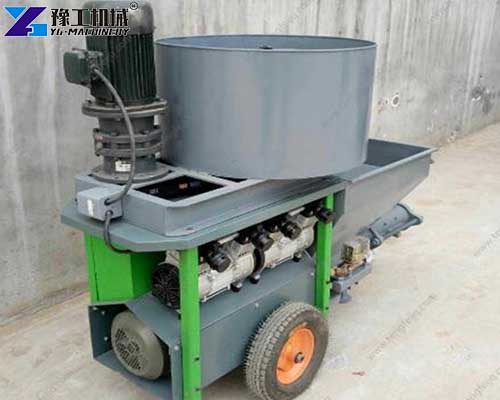
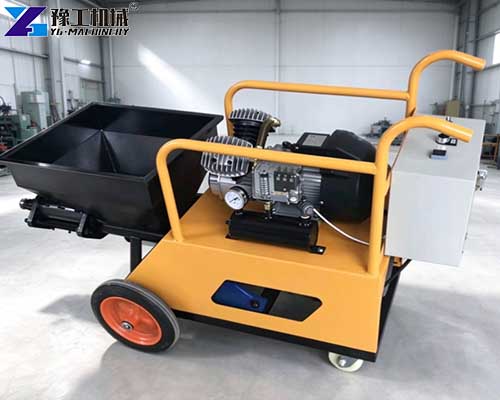
A mortar pump sprayer that runs on pump pressure puts more material on the wall and less on the floor. Air-assisted units use compressed air to push mortar across the gap, and that air stream throws a portion of the mix past the target as bounce-back. Contractors must sweep up the fallen material, discard it, and replace it with fresh mix to finish the wall. Therefore, contractors counting material cost per square meter need to look at how the sprayer delivers mortar, not only at its output rating. Our engineering team builds units that hold steady pressure at the nozzle, which keeps the mix on the wall.
TL;DR: Air-driven sprayers lose material to bounce-back on every pass. A pump-driven sprayer pushes mortar directly onto the wall without an air stream to blow it past the target. The 32 mm feeding pipe on the YG318, YG511, and YG711 carries material with lower friction, and reduced bounce-back and overspray as a direct benefit.
| Parameter | YG311 | YG318 | YG511 | YG711 |
|---|---|---|---|---|
| Capacity | 2–3 m³/h | 3 m³/h | 3–4 m³/h | 3 m³/h |
| Working pressure | 3–6 MPa | 3 MPa | Max 3 MPa | 6 MPa |
| Material ratio | Cement: Sand=1:3 | Water:Ash:Sand=0.7–1:1:3 | Water:Ash:Sand=0.7–1:1:3 | Water:Ash:Sand=0.7–1:1:3 |
| Voltage | 380V/220V | 380V | Diesel engine | 220V |
| Motor power | 4 kW | 7.5 kW | 8 HP / 12 HP | 4 kW + 4 kW mixer |
| Air supply | 2 kW pump | 0.3 m³/min | 0.3 m³/min | 0.4 m³/min |
| Spraying area | 150 m²/h | — | — | — |
| Horizontal distance | — | 60 m | 50–60 m | 60 m |
| Vertical distance | — | 40 m | 30–40 m | 40 m |
| Hopper volume | — | 80 L | 80 L | 100 L |
| Max aggregate | ≤3 mm | ≤12 mm | ≤8 mm | ≤8 mm |
| Feeding pipe | — | 32 mm | 32 mm | 32 mm |
| Total weight | — | 300 kg | 320 kg | 400 kg |
Why Bounce-Back Costs More Than It Looks on a Mortar Pump Sprayer
Bounce-back looks like a small loss on a single wall. Across a full floor, it becomes a material and cleanup problem. The fallen mortar must be swept up, removed from the site, and replaced with fresh mix to finish the wall. Meanwhile, the crew spends time on cleanup that could have gone into spraying the next wall. Those costs do not appear on the specification sheet, but they show up on the project budget.
Air-assisted units make the problem worse because the air stream does the work of carrying material. The air pressure that pushes mortar toward the wall also throws a portion past it. A pump-driven design removes the air stream entirely. The pump pushes mortar through the hose, and the nozzle shapes the pattern. Consequently, material leaves the gun with enough velocity to adhere but not enough to ricochet.
Where the Waste Actually Comes From
3 factors drive bounce-back on any plastering job:
- Gun distance from the wall. Too far, and the material loses velocity before it lands. Too close, and the stream ricochets off the surface.
- Flow rate against wall texture. A high flow on a smooth wall sends material running down and splashing off. A low flow on a rough wall leaves the surface starved and the operator compensating with repeated passes.
- Air pressure in air-assisted systems. The air that carries the mortar also scatters it, and the scatter becomes floor waste.
Our factory tests every pump and nozzle assembly before shipment. A machine that leaves the factory with a verified spray pattern produces less overspray from the first day on site. Contractors who buy machines without that verification spend the first week adjusting and wasting material while they discover the correct settings.
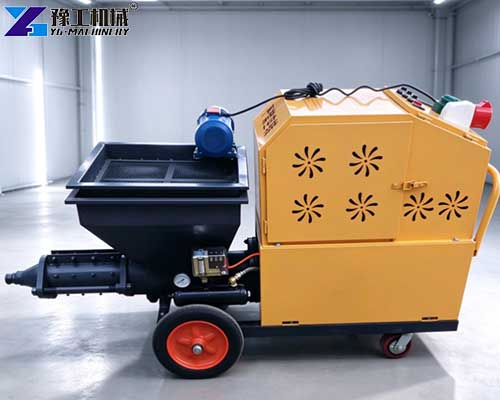
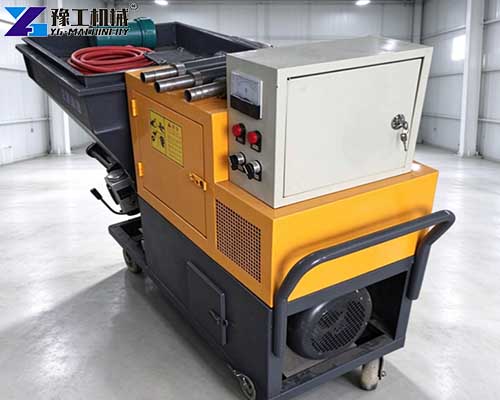
Keeping Material on the Wall with a Plastering Sprayer
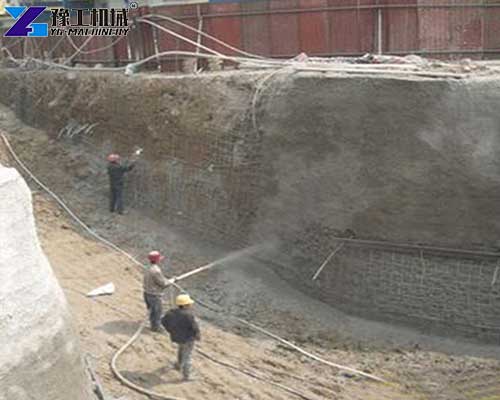
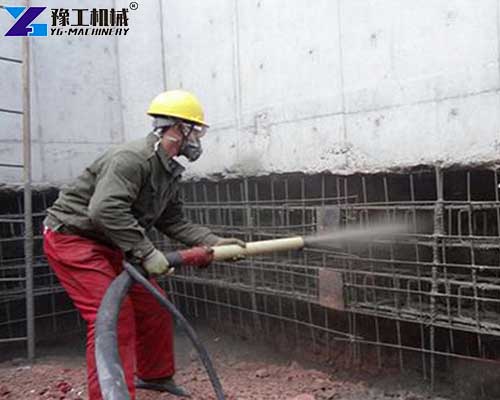
A plaster spraying equipment keeps material on the wall when the operator controls three variables: gun distance, flow rate, and spray angle. Reduced bounce-back and overspray is a direct benefit of the airless design, but that benefit depends on how the crew runs the machine.
Gun Distance and Spray Angle
Hold the gun at a consistent distance from the wall and keep it perpendicular to the surface. A tilted gun throws material sideways, and the sideways portion becomes floor waste. A consistent distance keeps the spray pattern uniform and the material velocity steady. Operators should pick a distance that keeps the pattern fully on the wall and adjust only when the wall texture changes.
Air-assisted systems depend on the operator adjusting air pressure and fluid pressure together to maintain a pattern. Our units remove that variable. The screw pump holds a steady 3–6 MPa at the nozzle on the YG311 mortar pump sprayer, so the spray pattern stays consistent even if the operator pauses or changes the spray angle. Consistent pressure means consistent velocity, and consistent velocity is what keeps mortar on the wall instead of on the floor.
Flow Rate Against Wall Texture
Different surfaces need different delivery. A rough concrete face absorbs material quickly and benefits from a slightly higher flow and a wider pattern. A smooth block wall needs a lower flow and a tighter pattern to avoid runs. Operators adjust flow at the gun without stopping the pump, which keeps the spray continuous and avoids cold joints. A cold joint forms where one pass ends and the next begins, and it becomes a weak line that cracks under thermal movement.
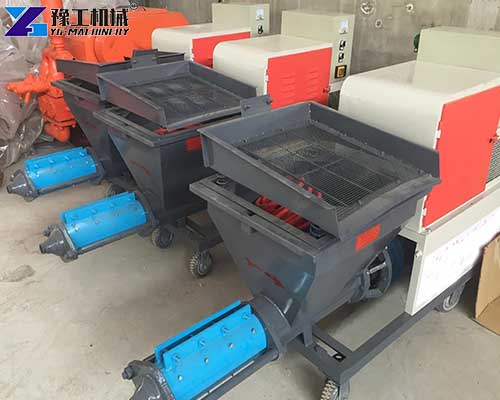
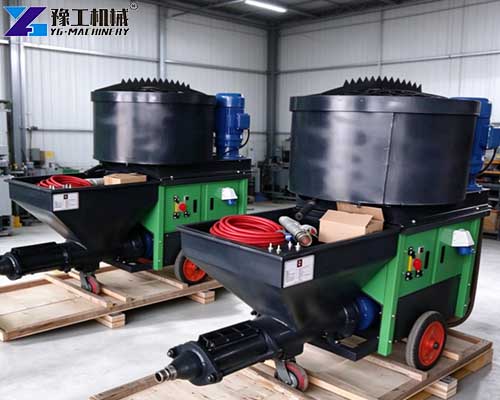
Pipe Size and Pressure on a Plaster Spraying Equipment Setup
A plastering sprayer setup delivers material at the pressure the pump generates, minus the friction loss along the route. The 32 mm feeding pipe on the YG318, YG511, and YG711 carries material with lower friction than a narrower line, which keeps pressure at the nozzle closer to the pump’s rated output. When pressure holds, the spray pattern stays uniform, and uniform patterns produce less overspray.
Matching Pressure to the Job
The YG711 delivers 6 MPa working pressure, the highest in the lineup, which suits thick mixes and long runs. The YG318 runs at 3 MPa and the YG511 at a maximum of 3 MPa, both sufficient for their rated reach. Higher pressure helps when the mix runs dense or the hose route includes extra bends, but it does not replace correct gun distance and flow settings. A machine at high pressure with the gun too far from the wall still wastes material.
A narrower hose drops pressure faster over a long run, and a drop in pressure means the spray pattern widens at the wall. When the pattern widens, material scatters and bounce-back increases. The 32 mm feeding pipe on the YG318, YG511, and YG711 maintains a steadier pressure from pump to gun, which keeps the spray pattern tight and the material on the target surface.
Daily Cleaning to Protect the Spray Pattern of Plastering Sprayer
Leftover mortar in the hose or pump chamber hardens overnight and blocks the line on the next start. Run clean water through the pump and hoses of the mortar pump sprayer until the output runs clear, then remove the nozzle and soak it in water for ten minutes. That routine keeps the switchover time short and prevents buildup inside the system.
The YG311’s 3 mm aggregate limit restricts it to fine-mortar applications. Contractors spraying coarse sand mixes should select the YG318 or YG711, accepting higher machine weight as the trade-off for aggregate tolerance.
Customer Practical FAQ for Plaster Spraying Equipment
Contractors comparing material waste across sprayer designs ask about bounce-back causes, gun technique, and what separates one airless unit from another. The answers below come from our engineering team’s field experience.
A: Savings depend on gun distance and wall texture. Air-assisted units waste material because compressed air blows a portion of the mix past the target. An airless unit pushes mortar directly with pump pressure, so material lands where you aim. Contractors measure the savings by the material swept up from the floor at the end of the shift.
A: Wind affects air-assisted systems far more than airless ones. An air stream carrying mortar loses control in crosswinds, scattering material before it hits the wall. An airless unit relies on mechanical pressure, so the spray pattern holds up better. However, high winds still affect operator stability. For exterior work, reduce spray distance, use a tighter nozzle pattern, or postpone the work if gusts make the spray unmanageable.
A: Nozzle size controls spray width and material flow. A wider nozzle suits large, open wall areas and coarse cement mortar, covering ground quickly. A narrower nozzle suits fine gypsum or tight spaces like corridors and columns. Proper nozzle selection affects spray width and distribution. Test a small section of the wall before spraying the full room, and check that the pattern covers the surface without runs or gaps.
A: Never leave leftover mortar in the hopper overnight, as it hardens and becomes difficult to remove. Run clean water through the pump and hoses until the output runs clear, as recommended. Remove the nozzle and soak it in water for ten minutes. For the leftover mortar, mix it with water to keep it workable and use it on rough surfaces, or dispose of it according to local site regulations.
Factory Supply & Contact
We build mortar pump sprayers that put material on the wall instead of the floor. The YG318, YG511, and YG711 share a 32 mm feeding pipe and steady pressure delivery, while the YG711 adds 6 MPa working pressure for thick mixes and long runs. Contact our sales team for a detailed quote and ROI calculation based on your daily project scale. Send your wall type, daily material volume, and hose layout, and our engineers will confirm which model keeps your material on the wall.
🔍: Related reading
Airless vs. Air-Assisted: Which Plaster Sprayer Saves More Material on Site
Voltage Matching for a Mortar Sprayer: Why the Wrong Power Source Kills Output and Budget