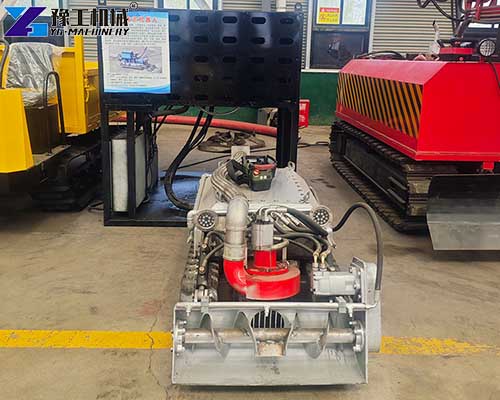
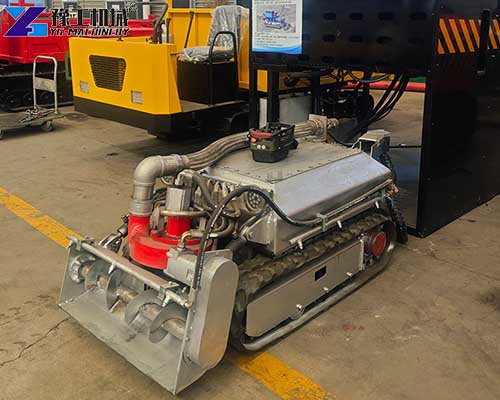
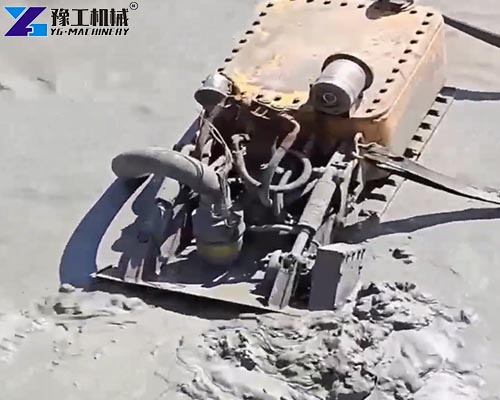
Underwater Dredging Robot pump blockage is the most common complaint we receive from contractors. The root cause is almost always a mismatch between pump flow, outlet diameter, and particle size rating. Our YG series uses two pump configurations: a 3-inch outlet with 100 m³/h flow and 15 mm particle handling, and a 4-inch outlet with 200 m³/h flow and 38 mm or 60 mm particle handling. This article explains how these three parameters work together and how to match them to your sediment conditions. The right dredge robot pump configuration prevents stoppages before they happen.
TL;DR: Pump flow and particle size must match. Our 3-inch configuration handles 100 m³/h and 15 mm particles. Our 4-inch configuration handles 200 m³/h and 38–60 mm particles. If your site has gravel, choose a 4-inch model. If it is sand only, a 3-inch model is sufficient.
Why Underwater Dredging Robot Pump Flow and Outlet Diameter Must Match
Pump flow rate and outlet diameter are physically linked. A 3-inch outlet passes 100 m³/h efficiently. A 4-inch outlet passes 200 m³/h efficiently. Forcing higher flow through a smaller outlet creates back pressure, reduces efficiency, and increases wear.
Our YG series pairs these parameters deliberately:
- YG-500 and YG-600: 3-inch outlet, 100 m³/h, 15 mm particle rating
- YG-700, YG-800, and YG-900: 4-inch outlet, 200 m³/h, 38 mm particle rating
- YG-1200: 4-inch outlet, 200 m³/h, 60 mm particle rating
| Model | YG-500 | YG-600 | YG-700 | YG-800 | YG-900 | YG-1200 |
| Robot dimensions | 1500*500*650mm | 1500*600*650mm | 1600*700*650mm | 1600*850*700mm | 1650*960*750mm | 1900*1200*750mm |
| Dredging width | 500mm | 600mm | 700mm | 800mm | 900mm | 1200mm |
| Track travel speed | 3-15m/s | 3-15m/s | 3-15m/s | 3-15m/s | 3-15m/s | 3-15m/s |
| Robot weight | 320kg | 350kg | 380kg | 400kg | 420kg | 500kg |
| Pump output diameter | 3inch | 3inch | 4inch | 4inch | 4inch | 4inch |
| Pump flow rate(cubic meters/ hour) | 100 m³ | 100m³ | 200m³ | 200m³ | 200m³ | 200m³ |
| Pump head | 0-30m | 0-30m | 0-30m | 0-30m | 0-30m | 0-25m |
| Hydraulic station dimensions(mm) | 2200*1200*1700 | 2200*1200*1700 | 2200*1200*1700 | 2200*1200*1700 | 2200*1200*1700 | 2120*1240*1200 |
| Main motor power | 22kw | 22kw | 30kw | 30kw | 30kw | 45kw |
| Hydraulic system pressure | 0-16Mpa | |||||
| Particle size | 15mm | 15mm | 38mm | 38mm | 38mm | 60mm |
| Reeling system speed | 0-10r/min | |||||
| Hydraulic hoses | 50m (Standard configuration) | |||||
| Control system | Wireless remote control | |||||
| Lighting system | Underwater LED lights *2 | |||||
When comparing a dredge cutter for river maintenance, check whether flow and outlet diameter are matched. A machine advertising high flow through a small outlet will not sustain that flow in real conditions.
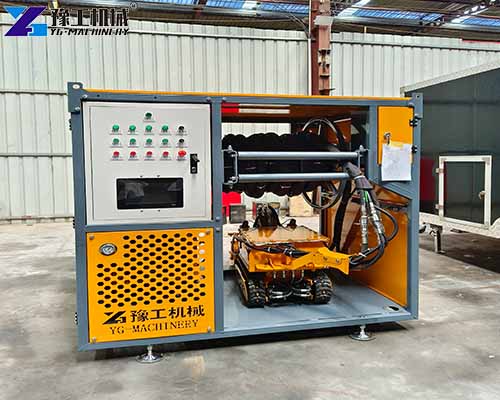
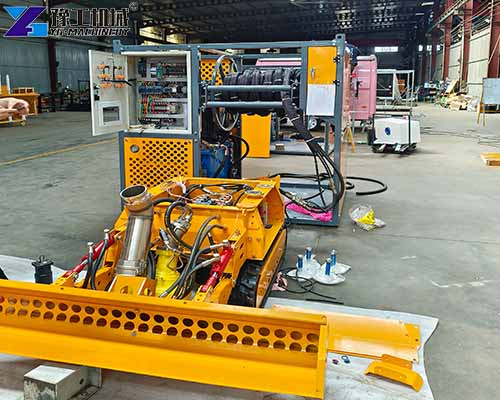
How Dredge Cutter Particle Size Rating Determines Blockage Frequency
Particle size rating defines the largest solid the pump can pass without blockage. This rating is directly tied to outlet diameter.
- 15 mm rating (YG-500, YG-600): Passes fine sand, silt, and small organic debris. Stops on gravel, stones, and construction waste.
- 38 mm rating (YG-700, YG-800, YG-900): Passes small gravel and most storm debris. Stops on larger stones and compacted clay clumps.
- 60 mm rating (YG-1200): Passes gravel, stones, and most municipal drainage debris without pre-screening.
A cutter river sand dredging machine selected for sandy river conditions may fail in gravel because the 15 mm rating cannot pass larger debris. Our technical team matches the particle size rating to the worst-case debris in your water body, not the average.
Cutter River Sand Dredging Machine Pump Performance Across Sediment Types
Different sediment types place different demands on the pump system. The following table summarizes our recommendations.
| Sediment Type | Recommended Model | Pump Configuration | Reason |
|---|---|---|---|
| Fine sand, silt | YG-500 or YG-600 | 3-inch, 100 m³/h, 15 mm | Lower operating cost, sufficient for fine material |
| Sand with small gravel | YG-700, YG-800, or YG-900 | 4-inch, 200 m³/h, 38 mm | Handles gravel without frequent stops |
| Gravel, stones, construction debris | YG-1200 | 4-inch, 200 m³/h, 60 mm | Handles large debris without pre-screening |
| Clay, compacted sediment | YG-700 or above | 4-inch, 200 m³/h, 38 mm+ | Higher motor power (30 kW+) maintains flow under load |
For clay and compacted sediment, motor power matters as much as pump flow. Our 22 kW models (YG-500, YG-600) may struggle under continuous heavy load. Our 30 kW and 45 kW models maintain flow without overheating. Every Underwater Dredging Robot we ship includes a 50 m hydraulic hose as standard.
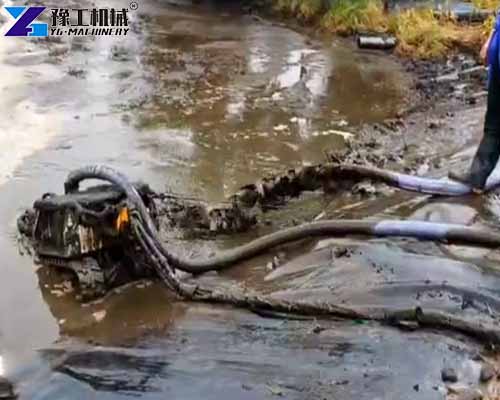
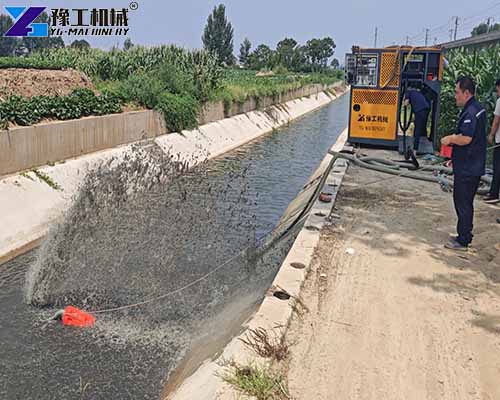
Three Pump Configuration Fixes for Blockage Problems
If your current dredging robot stops frequently, check these three parameters:
- Outlet diameter vs. debris size. If you are passing gravel through a 3-inch outlet, upgrade to a 4-inch model. The 38 mm or 60 mm particle rating eliminates most blockages.
- Flow rate vs. daily output target. If you need 1,500 m³ per 8-hour shift, a 100 m³/h model requires 15 hours of continuous operation. A 200 m³/h model completes the same volume in 7.5 hours. The larger pump reduces operating time and labor cost.
- Motor power vs. sediment weight. If the pump slows under load, the motor may be undersized. Our 30 kW and 45 kW models maintain flow in heavier sediment. Our 22 kW models are designed for lighter conditions.
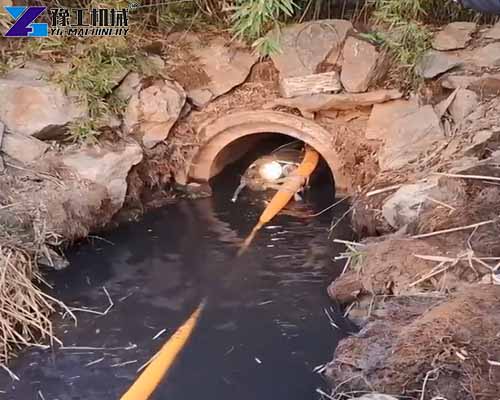
For projects with long linear distances, our reeling system at 0–10 r/min manages hose deployment, but it does not extend the 50 m maximum length. If your channel exceeds 50 m, plan multiple setup points or request extended hose configuration. For a dredge cutter operating in long culverts, hose length is often the limiting factor, not pump performance.In addition to the pump configuration, the machine’s operating depth is also a key factor.
Customer FAQ About Underwater Dredging Robot Pump Systems
A: YG-500 and YG-600 handle up to 15 mm. YG-700, YG-800, and YG-900 handle up to 38 mm. YG-1200 handles up to 60 mm. Our team matches this rating to the largest debris expected in your water body.
A: Our 3-inch outlet on YG-500 and YG-600 delivers 100 m³/h and handles 15 mm particles. Our 4-inch outlet on YG-700 through YG-1200 delivers 200 m³/h and handles 38–60 mm particles. The larger outlet supports higher daily output and fewer blockages.
A: If gravel is present, choose a model rated for at least 38 mm particles: YG-700, YG-800, or YG-900. If the river is mostly sand with no gravel, YG-500 or YG-600 may be sufficient.
A: Clay and compacted sediment require higher motor power to maintain flow under load. Our 22 kW models are designed for lighter conditions. For clay, we recommend YG-700 or above with a 30 kW or 45 kW motor.
A: Pump outlet diameter and impeller design are fixed at the factory. Upgrading from a 3-inch to a 4-inch configuration requires a different model. Our technical team can recommend the correct model based on your sediment conditions.
Factory Support & CTA
Our factory provides complete pump selection support for every dredge cutter order. Send us your sediment type, maximum debris size, and required daily volume. Our engineers will respond with a model recommendation, configuration proposal, and quotation within one business day. Every unit ships with English operation manuals, remote video technical guidance, and a continuous supply of consumable parts.