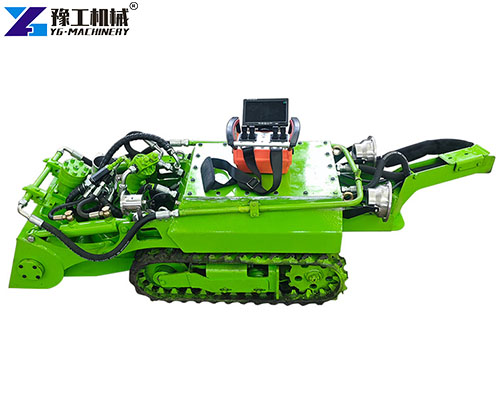
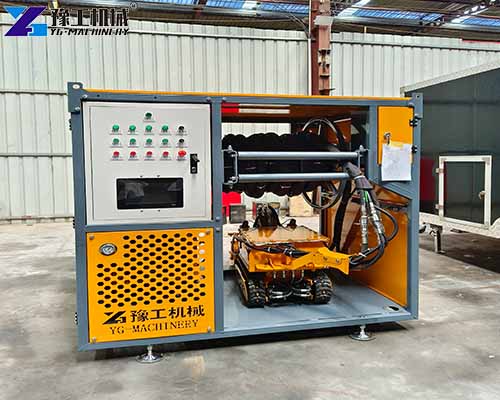
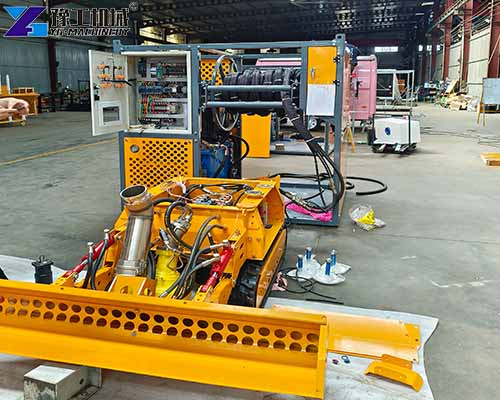
River Dredging Robot power selection starts with a simple default: electric drive is the standard recommendation for most projects. Our factory states this clearly—electric units are recommended for most applications because they cost less to operate and are simpler to maintain. However, a standard recommendation is not a universal rule. When site conditions prevent reliable grid power, the diesel configuration becomes necessary rather than optional. This article explains the specific conditions that push a project from electric to diesel, and what our engineers need to confirm before specifying a power source. If your site has uncertain power access, simply send us your location and grid status, and we will tell you whether the standard electric configuration is sufficient or a diesel power station is required.
Why Electric Remains the Standard River Dredging Robot Configuration
| Model | YG-500 | YG-600 | YG-700 | YG-800 | YG-900 | YG-1200 |
| Robot dimensions | 1500*500*650mm | 1500*600*650mm | 1600*700*650mm | 1600*850*700mm | 1650*960*750mm | 1900*1200*750mm |
| Dredging width | 500mm | 600mm | 700mm | 800mm | 900mm | 1200mm |
| Track travel speed | 3-15m/s | 3-15m/s | 3-15m/s | 3-15m/s | 3-15m/s | 3-15m/s |
| Robot weight | 320kg | 350kg | 380kg | 400kg | 420kg | 500kg |
| Pump output diameter | 3inch | 3inch | 4inch | 4inch | 4inch | 4inch |
| Pump flow rate(cubic meters/ hour) | 100 m³ | 100m³ | 200m³ | 200m³ | 200m³ | 200m³ |
| Hydraulic station dimensions(mm) | 2200*1200*1700 | 2200*1200*1700 | 2200*1200*1700 | 2200*1200*1700 | 2200*1200*1700 | 2120*1240*1200 |
| Main motor power | 22kw | 22kw | 30kw | 30kw | 30kw | 45kw |
| Hydraulic system pressure | 0-16Mpa | |||||
| Particle size | 15mm | 15mm | 38mm | 38mm | 38mm | 60mm |
| Reeling system speed | 0-10r/min | |||||
| Hydraulic hoses | 50m (Standard configuration) | |||||
| Control system | Wireless remote control | |||||
| Lighting system | Underwater LED lights *2 | |||||
Electric drive is the standard because it removes a separate fuel system from the equipment scope. An electric unit connects to the local grid through the hydraulic power station, and the machine operates without refueling, fuel storage, or engine maintenance. Our documentation recommends electric units for most projects because they cost less to operate and are simpler to maintain.
This default works well when the site has stable grid power, and the working point remains fixed for the duration of the project. Municipal wastewater plants, fixed industrial settling tanks, and river sections adjacent to established power infrastructure are typical examples. However, the default only holds when power access is reliable. Once grid power becomes uncertain, the calculation changes.
When Water Tank Cleaning Robot Diesel Becomes Necessary
Diesel is not a premium option. It is a response to specific site conditions. Industry documentation for dredging equipment describes the diesel-powered split hydraulic power unit as eliminating reliance on mains power and expanding applicability for “power-constrained scenarios such as remote areas, temporary construction, and emergency rescue.” That description maps directly to three conditions that make electric operation impractical:
- No reliable grid connection. Remote river sections, isolated ponds, and temporary sites may not have a power source within practical cable distance. Running a dedicated power line can take longer than the dredging work itself.
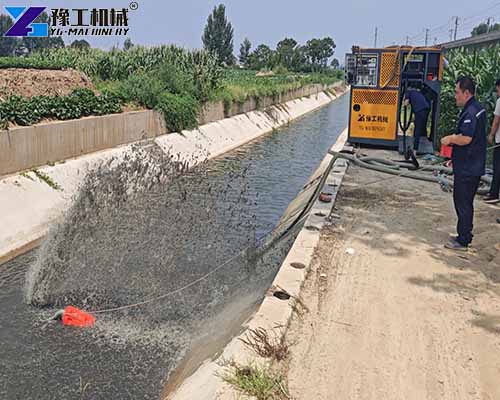
- Working point moves frequently. When a project requires the machine to move between separate water bodies or along a long channel, an electric river dredging robot must either relocate its power connection or operate within cable range. A diesel power station can move with the robot.
- Continuous operation without cable management. Cable-dependent operation imposes a working radius. A diesel power station removes that radius, allowing the robot to work farther from a fixed power point without repositioning the station.
For a water tank cleaning robot deployed across multiple tanks on the same industrial site, the same logic applies: if the power point is fixed but the tanks are not, the diesel configuration allows the machine to move between tasks without rewiring.
Whether you choose electric or diesel power, you can calculate your payback with our data on crawler dredging robot ROI performance.

What to Confirm Before Choosing Sand Dredging Machine Price Diesel Power
Power selection is not a preference question. It is a site-matching question. Before specifying a diesel configuration, our engineers need three inputs:
- Grid status at the working site. Is there a usable power source? If yes, what is the distance from the power point to the hydraulic station?
- Working pattern. Does the machine stay at one point for the project duration, or does it move between multiple points?
- Daily operating hours. How many hours per day does the machine need to run continuously?
If the site has reliable power and a fixed working point, the standard electric configuration remains the correct specification. If any of the three inputs points toward power uncertainty or mobility, the diesel configuration becomes the practical choice. Our parameter table lists the diesel option for the YG-1200 water tank cleaning robot at 76KW (123KW), and our team confirms the matching power station for your selected model. When comparing a sand dredging machine price proposal, keep in mind that the power source determines the total site preparation requirements, not just the equipment itself.
When evaluating your project, please refer to our selection guide to determine which power system is best suited for your site.
Customer FAQ About River Dredging Robot Power Configuration
A: Power configuration is determined by the hydraulic power station and the electrical system scope. Switching after delivery is not a field change. If your site conditions may change, confirm both options during the inquiry stage so the configuration matches your project from the start.
A: The robot’s core dredging parameters—pump flow, particle size, and working depth—remain the same. The power source determines how the hydraulic station is driven, not the robot’s mechanical capability. The diesel option extends where the machine can operate, not what it can pass or lift.
A: Diesel power is listed for the YG-1200 configuration in our parameter table. For smaller models, the standard configuration is electric. If your site requires diesel power on a smaller model, contact our technical team to confirm whether the configuration is available for your specific project.
A: If your site has stable grid power within cable distance and the working point does not move, electric is sufficient. If the site is remote, the working point moves frequently, or extending the power connection would delay the project, diesel becomes the practical option. Send us your site conditions, and we will confirm.
Factory Support & CTA
Our factory provides power configuration matching for every sand dredging machine price project. If your site has uncertain grid access or the working point moves between locations, send us your site conditions—location, power availability, and working pattern. Our engineers will confirm whether the standard electric configuration is sufficient or whether a diesel power station is required, and respond with a technical recommendation within one business day.