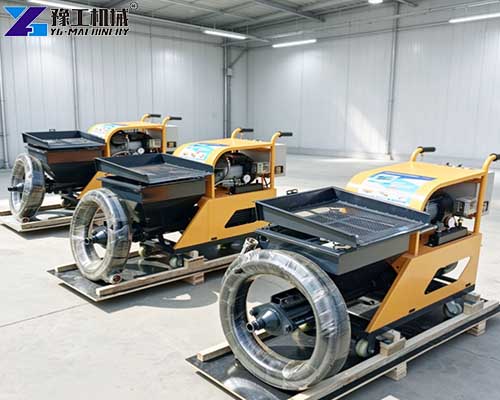
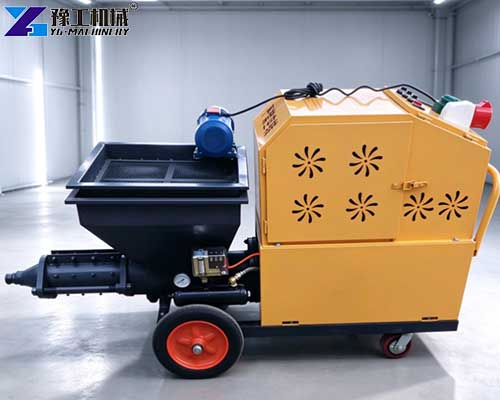
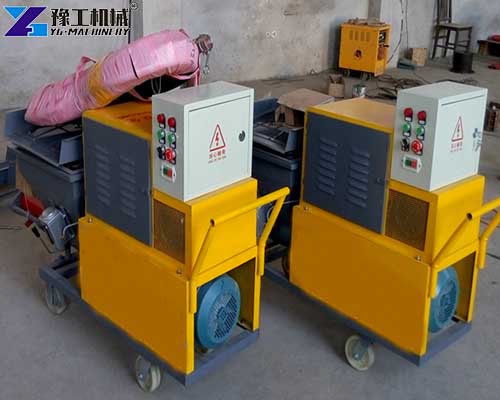
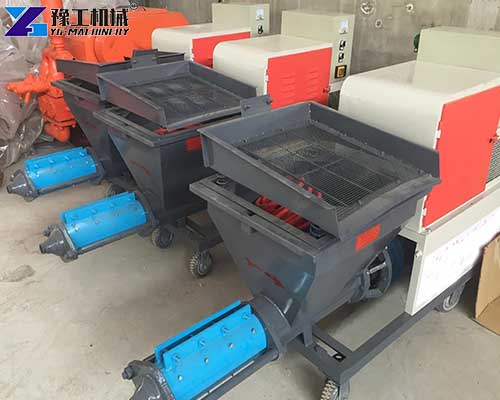
A plaster sprayer machine handles more than cement mortar when the operator matches pressure, flow, and aggregate size to the material. Many contractors assume these machines only spray cement-sand mixes, and that assumption limits their bidding range. However, gypsum plaster and lime-based mixes move through the same pump chamber when the crew adjusts the mix and nozzle. Therefore, the real question is not whether one machine can spray different materials, but which settings each material requires. Our engineering team builds models that cover the full range of finishes, from coarse mortar to fine gypsum.
TL;DR: A plastering sprayer moves cement mortar, gypsum plaster, and lime-based mixes when pressure and flow match the material. Coarse aggregate suits the YG318 and YG511/711, while fine gypsum work suits the YG311. The pump design stays the same; the mix, nozzle, and pressure setting change.
| Parameter | YG311 | YG318 | YG511 | YG711 |
|---|---|---|---|---|
| Capacity | 2–3 m³/h | 3 m³/h | 3–4 m³/h | 3 m³/h |
| Working pressure | 3–6 MPa | 3 MPa | Max 3 MPa | 6 MPa |
| Material ratio | Cement: Sand=1:3 | Water:Ash:Sand=0.7–1:1:3 | Water:Ash:Sand=0.7–1:1:3 | Water:Ash:Sand=0.7–1:1:3 |
| Voltage | 380V/220V | 380V | Diesel engine | 220V |
| Motor power | 4 kW | 7.5 kW | 8 HP / 12 HP | 4 kW + 4 kW mixer |
| Air supply | 2 kW pump | 0.3 m³/min | 0.3 m³/min | 0.4 m³/min |
| Spraying area | 150 m²/h | — | — | — |
| Horizontal distance | — | 60 m | 50–60 m | 60 m |
| Vertical distance | — | 40 m | 30–40 m | 40 m |
| Hopper volume | — | 80 L | 80 L | 100 L |
| Max aggregate | ≤3 mm | ≤12 mm | ≤8 mm | ≤8 mm |
| Feeding pipe | — | 32 mm | 32 mm | 32 mm |
| Total weight | — | 300 kg | 320 kg | 400 kg |
Breaking the One-Material Assumption: What a Plaster Sprayer Machine Can Actually Spray
Most contractors buy a machine for cement mortar and never test other materials. That habit leaves money on the table because the same pump handles gypsum plaster and lime-based mixes with different settings. The screw pump does not care whether the binder is cement or gypsum; it cares about particle size, mix consistency, and the pressure needed to move the material through the hose.
Cement mortar carries sand and therefore requires a coarser aggregate limit. Gypsum plaster sets faster than cement and demands a cleaner pump between batches. Lime-based mixes flow differently from cement and need a nozzle adjustment to spread evenly across the wall. Each material has a working range, and the machine covers all of them when the crew adjusts the right variables.
Why Contractors Underuse Their Machines
The underuse comes from habit, not from equipment limits. A crew that sprays cement every day keeps the same nozzle and mix ratio because it works. Switching to gypsum means cleaning the pump thoroughly, changing the nozzle, and testing a small batch before spraying the full wall. That extra step takes time on the first job and pays back on every job after. Contractors who master two or three materials bid on more work without buying a second machine.
Matching Pressure and Aggregate Size to Each Material
Pressure and aggregate size decide whether a plastering sprayer runs smoothly or blocks mid-wall. Cement mortar tolerates coarser sand because the mix carries more binder and the pump moves it at higher pressure. Gypsum- and lime-based mixes need finer material and different flow settings to avoid separating inside the hose.
Cement Mortar: Higher Pressure and Coarser Aggregate
Cement-sand mixes suit the models with wider pump chamber clearance. The YG318 accepts aggregate up to 12 mm and delivers 3 m³/h at 3 MPa, which handles structural mortar on exterior walls. The YG511 and YG711 accept up to 8 mm, and the YG711 reaches 6 MPa working pressure for dense mixes that resist flow. Meanwhile, the YG311’s 3 mm limit restricts it to fine-finish mortar, which makes it a poor choice for coarse local sand.
Gypsum and Lime: Finer Material and Different Flow
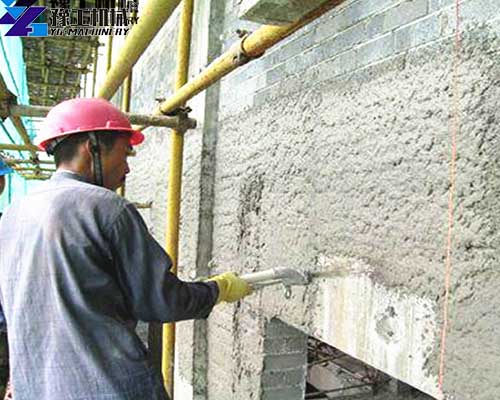
Gypsum plaster needs finer aggregate and gentler delivery. The YG311’s 3 mm limit suits this finish because the pump chamber stays clear of coarse particles that would distort the pattern. Operators reduce flow at the gun and keep the spray moving to avoid uneven thickness, which shows as visible lines after drying. Lime-based mixes behave differently from cement and gypsum, and operators adjust the nozzle of a plaster sprayer machine to spread the material evenly across the wall surface.
Practical Settings for a Spray Machine for Plastering Across Materials
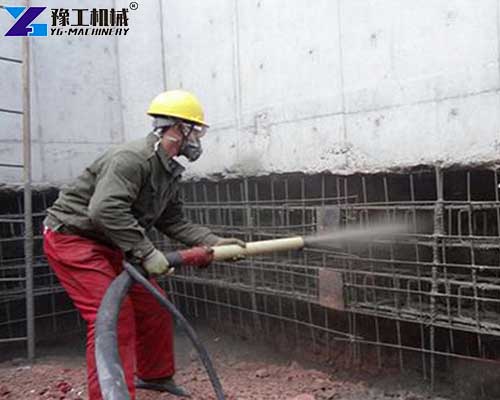
A spray machine for plastering needs three adjustments when switching materials: aggregate screening, mix ratio, and nozzle selection. Get these right, and the pump handles the rest.
The Three Adjustments
- Screen the aggregate to the model’s limit. Cement mortar suits the YG318 at 12 mm or the YG511/711 at 8 mm. Gypsum requires finer material, which suits the YG311’s 3 mm limit.
- Hold the water-cement-sand ratio at 0.7–1:1:3 for cement mixes. The YG318, YG511, and YG711 share this ratio. Gypsum and lime-based mixes need their own water ratio, which the operator confirms by testing a small batch before loading the hopper.
- Change the nozzle to match the finish. A wider pattern suits coarse mortar on exterior walls, while a tighter pattern suits fine gypsum on interior surfaces.
Clean the pump thoroughly between material changes. Gypsum sets faster than cement, and residue left in the chamber hardens before the next batch. Run clean water through the pump and hoses until the output runs clear, then remove the nozzle and soak it in water for ten minutes. That routine keeps the switchover time short and prevents buildup inside the system.
Customer Practical FAQ for Plastering Sprayer
Contractors expanding their service range ask about material switching, cleaning between batches, and which model covers the most finishes. The answers below come from our engineering team’s field experience.
A: Yes, but the pump must be flushed thoroughly between materials. Gypsum sets faster than cement, and residue left in the pump chamber hardens before the next batch. Run clean water through the pump and hoses until the output runs clear, then remove the nozzle and soak it in water for ten minutes. That routine keeps the changeover short and prevents buildup inside the system.
A: The YG318 plaster sprayer machine covers the widest aggregate range at up to 12 mm, which suits coarse cement mortar and most gypsum mixes. However, fine gypsum work benefits from the YG311’s tighter 3 mm clearance because the pump chamber stays clear of particles that would distort the pattern. Contractors who spray both coarse mortar and fine gypsum often keep one model for each finish rather than forcing a single machine to cover both extremes.
A: Yes. Coarse cement mortar suits a wider spray pattern that covers wall area quickly. Gypsum needs a tighter pattern and lower flow to avoid runs and uneven thickness. Operators change the nozzle and adjust flow at the gun without stopping the pump, which keeps the spray continuous across the wall. The right nozzle size and pressure setting vary by material, so test a small batch before spraying the full wall.
A: Basic operation takes about one hour to learn, as the machine’s controls and pump design stay the same across materials. Switching between cement and gypsum adds only the cleaning step and a nozzle change. Run clean water through the pump and hoses until the output runs clear, then remove the nozzle and soak it in water for ten minutes. Our team provides video tutorials with every machine, and crews that switch materials regularly develop a routine that keeps the changeover short.
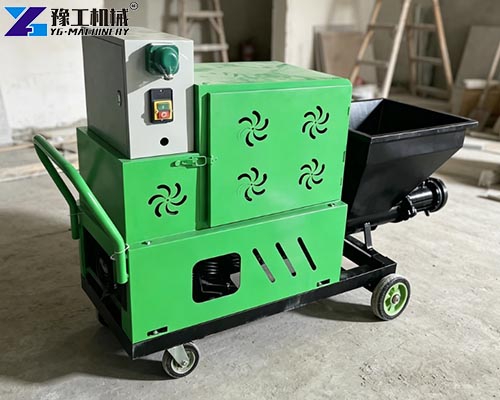
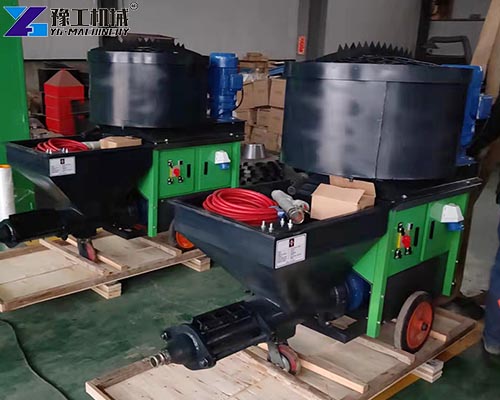
Factory Supply & Contact
We build plaster sprayer machines that cover cement mortar, gypsum plaster, and lime-based mixes across four models and multiple power configurations. Switching materials needs only a nozzle change and a clean pump, which lets one crew take on more finish types without buying a second machine. Contact our sales team for a detailed quote and ROI calculation based on your daily project scale. Send your material types, wall area, and power availability, and our engineers will match the model to your service range.