A mortar spraying machine reaches 60 m horizontally and 40 m vertically on the models built for long runs, but that reach depends on pressure, pipe size, and how the crew routes the hose. Contractors planning a 20-story lift or a basement pour ask the same question: will the pump hold pressure all the way to the nozzle, or will the line clog halfway up? Therefore, the answer is not a single number on a spec sheet. It is a combination of working pressure, feeding pipe diameter, and installation layout that the crew controls on site.
TL;DR: The YG318, YG511, and YG711 reach 60 m horizontally and 40 m vertically. The YG711 delivers 6 MPa working pressure for the longest runs, and the 32 mm feeding pipe on these models reduces friction compared to a narrower line. Bends and poor hose routing cut that reach faster than distance alone.
| Parameter | YG311 | YG318 | YG511 | YG711 |
|---|---|---|---|---|
| Capacity | 2–3 m³/h | 3 m³/h | 3–4 m³/h | 3 m³/h |
| Working pressure | 3–6 MPa | 3 MPa | Max 3 MPa | 6 MPa |
| Material ratio | Cement: Sand=1:3 | Water:Ash:Sand=0.7–1:1:3 | Water:Ash:Sand=0.7–1:1:3 | Water:Ash:Sand=0.7–1:1:3 |
| Voltage | 380V/220V | 380V | Diesel engine | 220V |
| Motor power | 4 kW | 7.5 kW | 8 HP / 12 HP | 4 kW + 4 kW mixer |
| Air supply | 2 kW pump | 0.3 m³/min | 0.3 m³/min | 0.4 m³/min |
| Spraying area | 150 m²/h | — | — | — |
| Horizontal distance | — | 60 m | 50–60 m | 60 m |
| Vertical distance | — | 40 m | 30–40 m | 40 m |
| Hopper volume | — | 80 L | 80 L | 100 L |
| Max aggregate | ≤3 mm | ≤12 mm | ≤8 mm | ≤8 mm |
| Feeding pipe | — | 32 mm | 32 mm | 32 mm |
| Total weight | — | 300 kg | 320 kg | 400 kg |
Why Pressure and Pipe Size Set the Limit on a Mortar Spraying Machine
Mortar loses pressure as it travels through the hose. Every meter of pipe adds friction, and every 90-degree bend adds more. The pump must overcome that friction while still delivering enough pressure at the nozzle to spray the material onto the wall. When friction exceeds the pump’s working pressure, the material stalls in the line and the crew faces a blockage.
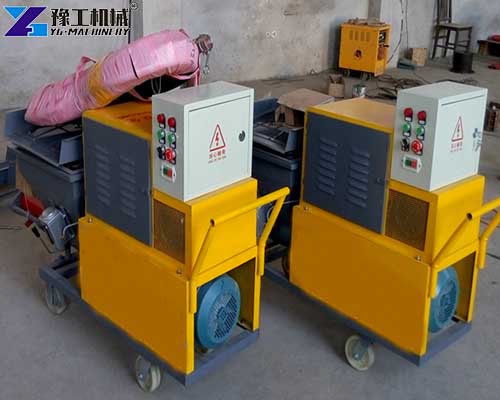
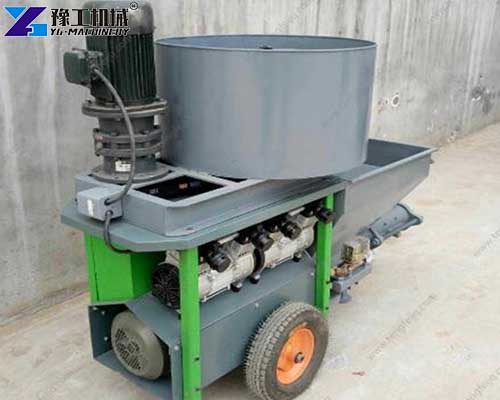
The YG711 cement plaster spray machine delivers 6 MPa working pressure, the highest in the lineup, which gives it the most margin for long runs and thick mixes. The YG318 runs at 3 MPa and the YG511 at a maximum of 3 MPa, both sufficient for their rated reach but with less headroom for extra bends or unusually dense material. Furthermore, the YG318, YG511, and YG711 all use a 32 mm feeding pipe, which carries material at lower friction than a narrower line. That pipe size matters as much as the pump pressure when the run gets long.
Horizontal vs. Vertical Reach: Why They Differ
Vertical lift costs more pressure than horizontal distance. Gravity works against the material on the way up, so a 40 m vertical rise demands more from the pump than 40 m of horizontal run. The YG318 and YG711 both list 60 m horizontal and 40 m vertical, and the YG511 lists 50–60 m horizontal and 30–40 m vertical. A crew spraying a 20-story exterior needs the vertical figure, not the horizontal one, and should plan the pump position so the vertical rise stays within the model’s limit.
Routing the Hose to Protect the Mortar Pump Sprayer Reach
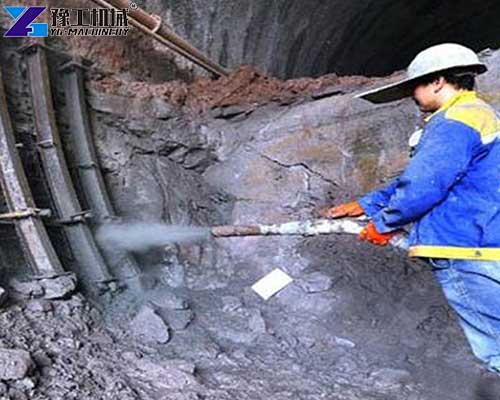
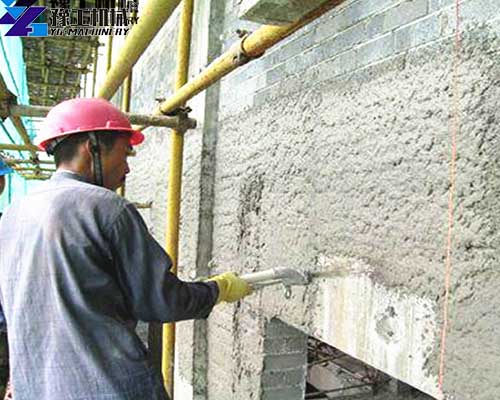
A cement plaster spray machine delivers its rated reach only when the hose follows a sensible path. Every unnecessary bend costs pressure, and a sharp 90-degree elbow near the pump outlet is worse than a gentle curve spread over several meters. The crew should plan the hose route before the first batch, not after the line stalls.
Four Routing Rules That Preserve Reach
- Run the hose as straight as the site allows. Every bend adds friction, and the pressure loss compounds over a long run. A route with two gentle curves outperforms one with four sharp elbows over the same distance.
- Keep the hose off the ground where possible. Dragging the line over rough concrete wears the outer layer and creates kinks that restrict flow. Suspend it on hooks or scaffolding where the route allows.
- Place the pump close to the vertical riser. The vertical section costs more pressure than the horizontal section, so shorten the horizontal run before the lift begins.
- Avoid sharp 90-degree elbows near the pump outlet. The material leaves the pump at full pressure, and a tight bend at that point creates the highest friction loss in the entire line.
Matching the Model to the Lift: When a Cement Plaster Spray Machine Reaches Its Limit
A mortar pump sprayer reaches its limit when the combined friction of distance, lift, and bends exceeds the pump’s working pressure. The crew sees the warning signs before the line blocks: the pressure gauge climbs, the spray pattern narrows, and the hose stiffens under hand pressure. When those signs appear, the fix is usually routing, not a bigger pump.
Model-by-Model Reach and Pressure
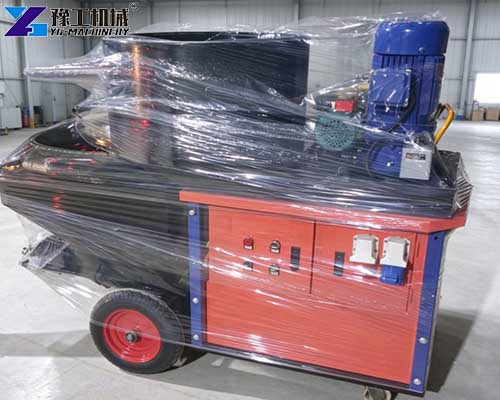
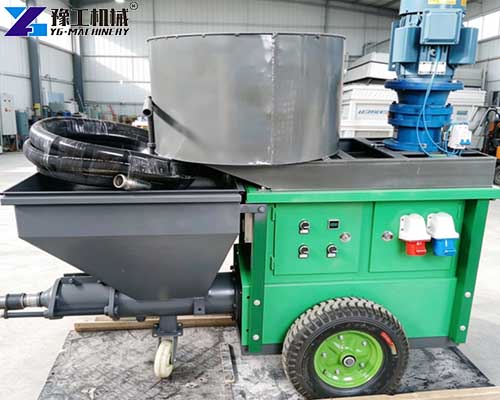
The YG318 delivers 3 m³/h at 3 MPa with 60 m horizontal and 40 m vertical reach, which suits medium-scale wall coating on multi-story buildings. The YG511 delivers 3–4 m³/h at a maximum of 3 MPa with 50–60 m horizontal and 30–40 m vertical reach, and its diesel engine removes the power constraint on remote sites. The YG711 delivers 3 m³/h at 6 MPa with 60 m horizontal and 40 m vertical reach, giving it the most headroom for thick mixes and long runs.
What Happens When the Run Exceeds the Rating of a Mortar Spraying Machine
Exceeding the rated reach does not produce a clean failure. The pump keeps running, but the material moves slower, the pressure at the nozzle drops, and the spray pattern becomes uneven. The crew may compensate by thinning the mix, which weakens the mortar and causes the wall to fail later. Therefore, the correct response is to reposition the pump closer to the work, add a relay pump, or select a model with higher pressure rather than to push the machine past its rating.
Customer Practical FAQ
Contractors planning long runs and high lifts ask about relay pumps, power supply on upper floors, diagnosis after a stall, and whether higher pressure always means longer reach. The answers below come from our engineering team’s field experience.
A: Repositioning works when the site allows you to move the pump closer to the riser. A relay pump becomes necessary when the machine cannot move, such as a basement pour where the main unit stays at ground level, and the riser climbs past the model’s vertical limit. The YG318 and YG711 list 40 m vertical reach, and the YG511 mortar spraying machine lists 30–40 m. When the riser exceeds that figure, and the pump cannot relocate, a relay pump keeps pressure at the nozzle. Contact our engineering team for custom voltage configurations and site layout advice before planning the relay position.
A: Yes. The YG511 uses an 8HP or 12HP diesel engine, so it needs no cable, no generator, and no electrician on site. That independence matters on high-rise and basement work where temporary power is unreliable or unavailable. However, the YG511 lists 30–40 m vertical reach, which is shorter than the YG318 and YG711 at 40 m. Contractors planning a lift beyond 40 m should plan the pump position or a relay rather than push the diesel unit past its rated reach.
A: Check two things before restarting. First, look at the pressure gauge: a reading that climbs steadily toward the pump’s working limit points to friction from distance or bends, while a reading that spikes suddenly points to a blockage from oversized aggregate or a dry mix. Second, check the mix against the 0.7–1:1:3 water-cement-sand ratio on the YG318, YG511, and YG711. If the ratio is correct and the gauge climbs gradually, the run exceeds the reach and needs repositioning or a relay. If the ratio is off or the gauge spikes, fix the mix and screen the sand before restarting.
A: No. Working pressure is only one variable. The 32 mm feeding pipe on the YG318, YG511, and YG711 carries material at lower friction than a narrower line, and hose routing decides how much of that pressure reaches the nozzle. A machine at 6 MPa with four sharp elbows can deliver less pressure at the gun than the same machine with two gentle curves. Pressure helps, but pipe size and routing set the practical limit. Contractors should plan the hose route before comparing pressure ratings between models.
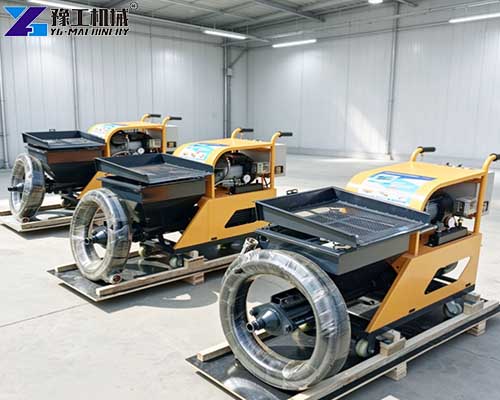
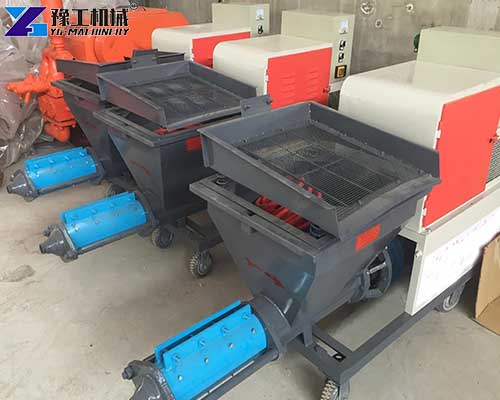
Factory Supply & Contact Mortar Pump Sprayer
We supply mortar spraying machines for contractors who map out hose routing before pumping starts — instead of scrambling once the line stalls mid-work. Our YG318 and YG711 offer 60 m horizontal and 40 m vertical reach, while the YG511 covers 50–60 m horizontal and 30–40 m vertical. Electric and diesel options span the range, and the YG711 delivers 6 MPa working pressure for longer pumping distances and thicker mortar mixes. Reach out to our sales team for a detailed quotation and ROI analysis tailored to your daily project scale. Share your required lift height, horizontal run, and hose layout, and our engineers will help confirm which model maintains stable pressure at the nozzle for your job site.