A plaster spray machine clogs for two reasons on almost every site: the mix ratio drifts outside the workable range, or sand particles exceed the pump chamber’s clearance limit. Both problems look like sudden failures, but both build up gradually and give warning signs before the hose blocks completely. Therefore, contractors who control the mix and screen the sand before loading avoid most clogs entirely. Our engineering team designs these machines with quick-release access so that when a blockage does happen, the crew clears it in minutes rather than hours.
TL;DR: Clogs come from oversized aggregate or a mix that is too dry, not from pump weakness. Screening sand to the model’s limit and holding the 0.7–1:1:3 ratio prevents most blockages. When a clog does occur, quick-release clamps let the crew open the pump chamber and flush the feeding pipe without tools.
| Parameter | YG311 | YG318 | YG511 | YG711 |
|---|---|---|---|---|
| Capacity | 2–3 m³/h | 3 m³/h | 3–4 m³/h | 3 m³/h |
| Working pressure | 3–6 MPa | 3 MPa | Max 3 MPa | 6 MPa |
| Material ratio | Cement: Sand=1:3 | Water:Ash:Sand=0.7–1:1:3 | Water:Ash:Sand=0.7–1:1:3 | Water:Ash:Sand=0.7–1:1:3 |
| Voltage | 380V/220V | 380V | Diesel engine | 220V |
| Motor power | 4 kW | 7.5 kW | 8 HP / 12 HP | 4 kW + 4 kW mixer |
| Air supply | 2 kW pump | 0.3 m³/min | 0.3 m³/min | 0.4 m³/min |
| Spraying area | 150 m²/h | — | — | — |
| Horizontal distance | — | 60 m | 50–60 m | 60 m |
| Vertical distance | — | 40 m | 30–40 m | 40 m |
| Hopper volume | — | 80 L | 80 L | 100 L |
| Max aggregate | ≤3 mm | ≤12 mm | ≤8 mm | ≤8 mm |
| Feeding pipe | — | 32 mm | 32 mm | 32 mm |
| Total weight | — | 300 kg | 320 kg | 400 kg |
Particle Size and Pump Chamber Limits: Why a Plaster Spray Machine Blocks
The rotor and stator form the pumping chamber, and the gap between them sets the maximum particle size the machine can pass. Mortar moves through that gap under pressure, and any stone larger than the clearance wedges against the rubber stator. Consequently, the rotor stalls, the pressure gauge spikes, and the hose may bulge at a weak point. The machine did not fail; the material exceeded its design limit.
The limit varies by model, and ignoring it is the fastest route to a blocked feeding pipe. The YG311 passes particles up to 3 mm, which suits fine-finish mortar but jams immediately with coarser sand. The YG511 and YG711 plaster sprayer accept up to 8 mm, and the YG318 tolerates up to 12 mm for contractors working with local sand that runs coarse. Screen the sand over the hopper with a simple mesh before loading. That five-minute habit catches oversized stones before they reach the pump chamber and prevents the majority of hard blockages.
Signs That a Clog Is Building
A blockage rarely happens without warning. The pressure gauge climbs while the spray pattern narrows or sputters. The hose stiffens under the operator’s hand, and the pump note changes from steady to strained. When these signs appear, stop spraying and check the mix before the obstruction solidifies. Running the pump at reduced speed buys time to diagnose whether the problem is dry mix or oversized aggregate.
Mix Ratio and Feeding Pipe Flow: Getting Plaster Sprayer Performance Right
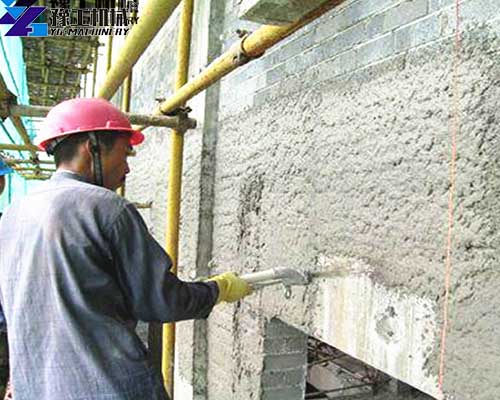
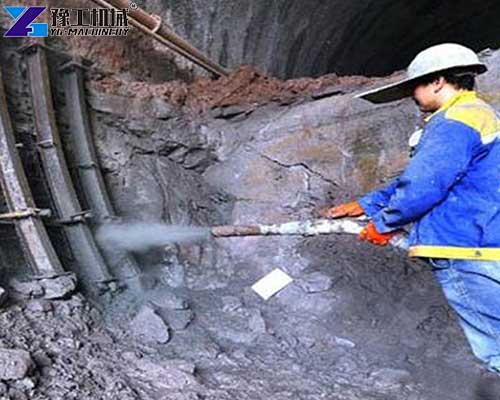
A plaster spraying equipment moves material only when the mix stays workable. The water-cement-sand ratio of 0.7–1:1:3 provides enough water to lubricate particles without turning the mortar into a slurry that separates inside the feeding pipe. A dry mix raises friction in the pump chamber and causes pack-outs. A wet mix reduces pumping efficiency and lets abrasive sand settle out of suspension, which then hardens in the hose.
Start each day with a slightly wetter batch to prime the hose and coat the internal surfaces. Then adjust toward the target ratio as the pump reaches operating temperature. Mix in small batches and check consistency by hand before loading the hopper. If the mortar crumbles instead of holding shape, add water. If it runs off the trowel, add sand and cement in proportion.
Shutdown Routine for Plaster Spraying Equipment: Three Actions That Prevent Overnight Clogs
Most hard blockages form after the crew leaves the site. Mortar left in the pump chamber and feeding pipe sets overnight and turns the hose into a rigid tube. The next morning, the operator either spends hours chipping out hardened material or replaces the hose. A plaster sprayer setup that gets flushed at the end of the day avoids this entirely.
The Three Shutdown Actions
- Empty the hopper and run clean water through the pump. Fill the hopper with clean water and run the pump in forward mode until clear water exits the spray gun. This pushes residual mortar out of the pump chamber and feeding pipe.
- Reverse briefly, then disconnect and flush the hose. A short reverse cycle clears material from the rotor cavity. Disconnect the hose and flush it separately until the outflow runs clear.
- Remove and rinse the nozzle by hand. The spray nozzle of a plaster spray machine holds a small volume of mortar that hardens quickly and distorts the spray pattern on the next start.
With two people, the full sequence takes about ten minutes and prevents the most common cause of Monday morning downtime.
The YG311’s 3 mm aggregate limit requires diligent sand screening and restricts it to fine-mortar applications. Contractors working with coarse sand should select the YG318 or YG711, accepting higher machine weight as the trade-off for aggregate tolerance.
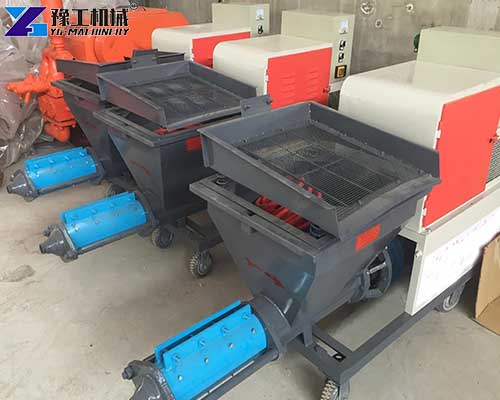
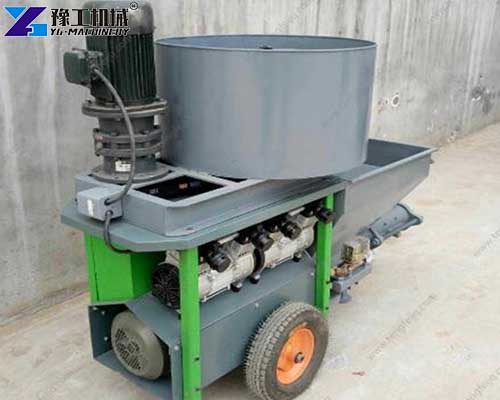
Quick-Release Clamps and Screw Pump Design: How Our Machines Reduce Clog Recovery Time
When a blockage does happen, recovery speed decides whether the crew loses an hour or a day. Our machines use quick-release clamps on the pump chamber, so a technician opens the housing, inspects the rotor, and clears the obstruction without tools. The high-pressure screw pump design maintains steady output at 3–6 MPa on the YG311 and up to 6 MPa on the YG711, which keeps thick mixes moving through the feeding pipe instead of stalling in the chamber.
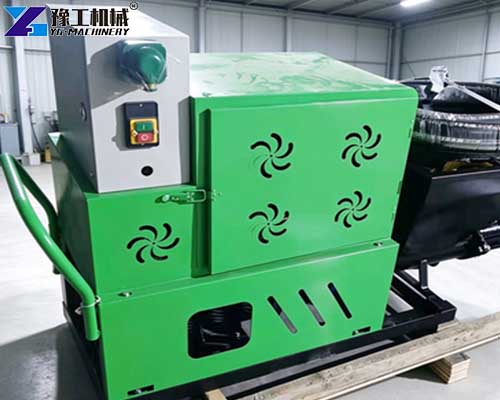
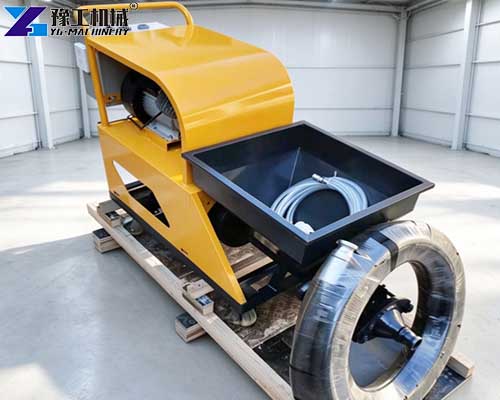
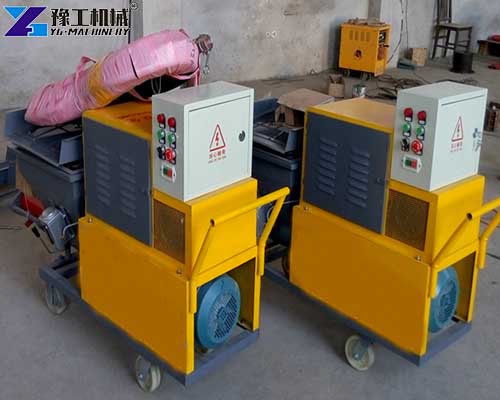
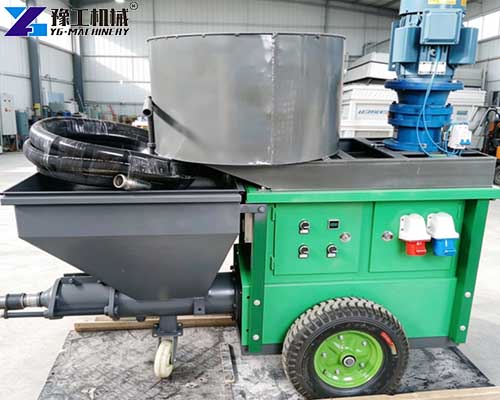
For contractors comparing models, the cement plaster spray machine page lists the full parameter set for each configuration. The YG318 suits sites where local sand runs coarse, while the YG511 diesel model removes the power constraint on remote projects. Each model shares the same clamp design, so a crew trained on one machine can service another without retraining.
Customer Practical FAQ of Plaster Sprayer
Contractors dealing with repeated blockages ask about aggregate limits, mix adjustments, and emergency procedures. The answers below come from our engineering team’s field experience.
A: The YG511 limit is 8 mm, and stones above that threshold will jam the rotor regardless of how many you remove. Screening helps only if the remaining material stays within the limit. A 10 mm stone that slips through a worn screen will stop the pump and may tear the stator. If your local supply consistently contains 10 mm material, the YG318 handles up to 12 mm and removes the screening burden.
A: Reverse the pump immediately. Forward operation against a blockage forces the rotor to grind against the obstruction and damages the stator. Reverse mode backs the rotor away and often releases the stone or compacted mortar. If reverse does not clear the blockage within a few seconds, stop the pump and disconnect the hose to locate the obstruction manually.
A: Watch the pressure gauge and the spray pattern. A dry mix causes pressure to climb while the spray narrows or sputters. The hose may also stiffen under your hand. When these signs appear, stop spraying and add water to the hopper before the blockage solidifies. Running the pump at reduced speed also buys time to diagnose the issue.
A: Water sitting in the hopper does not reach the rotor cavity or the feeding pipe. Mortar inside those components hardens regardless of what sits in the hopper. The flush must push water through the entire flow path, from hopper to spray gun, to prevent hardening. Partial flushing wastes water and leaves the most critical components uncleaned.
Factory Supply & Contact for Plaster Spraying Equipment
We build plaster spray machines with service access that makes clog recovery fast and daily cleaning practical. Aggregate limits from 3 mm to 12 mm let you match the machine to your sand supply, and the flush routine keeps the pump ready for the next morning. Contact our sales team for a detailed quote and ROI calculation based on your daily project scale. Send your sand specification, daily output target, and cleaning schedule, and our YG engineers will match the model to your site routine.