A mortar sprayer runs on one of three power configurations, and choosing the wrong one creates problems that no amount of operator skill can fix. Indoor renovation crews with access to standard 220V single-phase supply can work efficiently, while large-scale high-rise projects demand the torque and continuity that only 380V three-phase power delivers. Meanwhile, remote sites without any grid connection need a diesel engine or the job simply stops. Therefore, matching the power source to the site condition is the first decision a buyer makes, and it determines whether the machine earns money or sits idle.
TL;DR: A 220V mortar sprayer suits small indoor jobs with limited power access. A 380V three-phase unit handles continuous high-rise output without tripping breakers. A diesel-driven model such as the YG511 removes the power constraint entirely on remote sites. Buying the wrong configuration means either insufficient pressure on thick mixes or a machine that cannot start at all.
| Parameter | YG311 | YG318 | YG511 | YG711 |
|---|---|---|---|---|
| Capacity | 2–3 m³/h | 3 m³/h | 3–4 m³/h | 3 m³/h |
| Working pressure | 3–6 MPa | 3 MPa | Max 3 MPa | 6 MPa |
| Material ratio | Cement: Sand=1:3 | Water:Ash:Sand=0.7–1:1:3 | Water:Ash:Sand=0.7–1:1:3 | Water:Ash:Sand=0.7–1:1:3 |
| Voltage | 380V/220V | 380V | Diesel engine | 220V |
| Motor power | 4 kW | 7.5 kW | 8 HP / 12 HP | 4 kW + 4 kW mixer |
| Air supply | 2 kW pump | 0.3 m³/min | 0.3 m³/min | 0.4 m³/min |
| Spraying area | 150 m²/h | — | — | — |
| Horizontal distance | — | 60 m | 50–60 m | 60 m |
| Vertical distance | — | 40 m | 30–40 m | 40 m |
| Hopper volume | — | 80 L | 80 L | 100 L |
| Max aggregate | ≤3 mm | ≤12 mm | ≤8 mm | ≤8 mm |
| Feeding pipe | — | 32 mm | 32 mm | 32 mm |
| Total weight | — | 300 kg | 320 kg | 400 kg |
Indoor Renovation and Limited Power: When 220V Mortar Pump Sprayer Configurations Make Sense
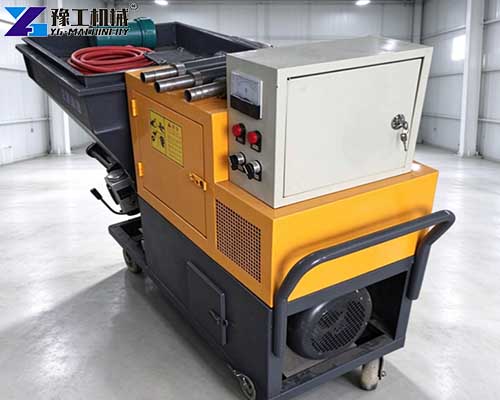
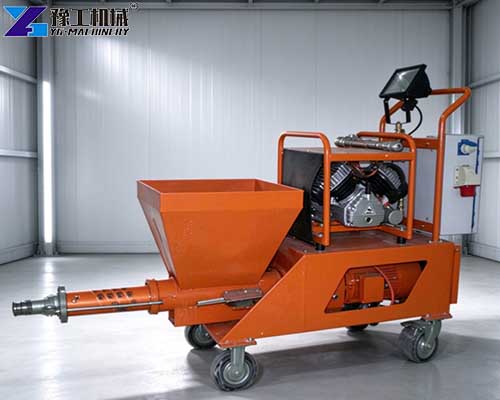
Small renovation projects rarely offer industrial power. A crew working on a residential floor or a retail fit-out often has access to a standard 220V outlet at best. Under those conditions, a 220V mortar spraying machine configuration keeps the job moving without electrical upgrades. The YG311 runs on a 380V or 220V electric supply with a 4 kW motor, delivering 2–3 m³/h at 3–6 MPa working pressure. That output suits room-by-room plastering where the crew moves the machine through doorways and repositioning matters more than raw volume.
However, 220V has limits that become visible fast. The motor draws higher current for the same power output compared to a three-phase equivalent, and long cable runs introduce voltage drop that reduces motor torque. Consequently, a 220V machine pushing thick mortar through 50 meters of hose at the upper end of its pressure range risks overheating the motor or tripping the circuit. For a single room or a small floor, the cycle stays short enough to avoid this. For continuous operation across a full building, the risk compounds.
The Hidden Cost of Undersized Power
A contractor who buys a 220V unit for a project that later expands to multiple floors faces a difficult choice. Running the machine at its limit shortens motor life and increases downtime. Upgrading to a 380V model means buying a second machine. Therefore, confirm the project scale before selecting voltage. If the site has 380V available and the work will run for weeks rather than days, the three-phase option pays for itself through lower failure risk.
High-Rise Output and Continuous Duty: Why 380V Mortar Spraying Machine Units Hold Pressure
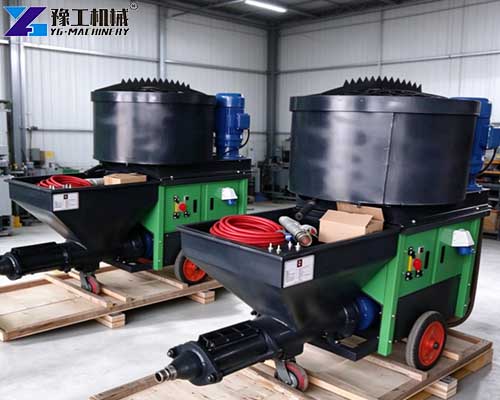
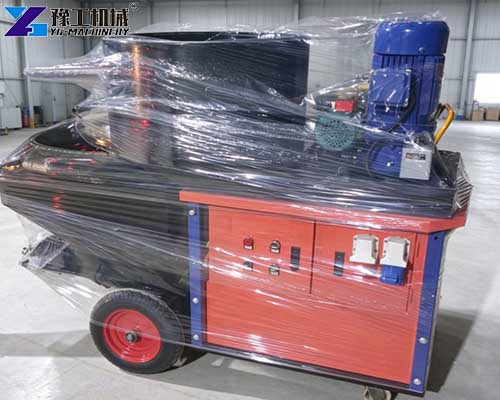
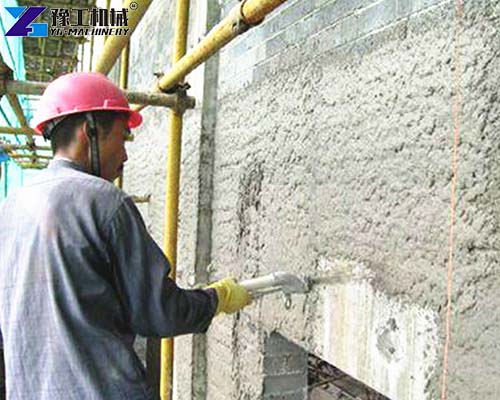
Large wall areas punish undersized power. A pump sprayer mortar running all day on a high-rise project must maintain pressure without interruption, and three-phase power delivers that stability. The YG318 uses a 7.5 kW motor on a 380 V supply, producing 3 m³/h at 3 MPa working pressure with a horizontal reach of 60 meters and vertical reach of 40 meters. Those figures mean a crew on the tenth floor can connect to a ground-level pump without relocating equipment between levels.
The YG711 pushes further on pressure. It delivers 3 m³/h at 6 MPa, the highest working pressure in the lineup, with the same 60-meter horizontal and 40-meter vertical reach. That pressure margin matters when the mix runs thick or when the hose routes through multiple bends on a scaffold. A 220V unit attempting the same duty cycle would draw excessive current and risk nuisance tripping. Furthermore, three-phase motors tolerate voltage fluctuations better than single-phase equivalents, which keeps output consistent when other equipment on site cycles on and off.
What Happens When You Connect the Wrong Voltage
The consequences range from inconvenient to expensive. A 380V machine connected to a 220V supply cannot draw enough power to reach its rated pressure. The motor strains, the pump delivers a weak flow, and thick mortar stalls in the hose. Conversely, a 220V machine wired into a 380V circuit faces overvoltage that can damage the motor winding and control components. Some sprayer controllers include protection that stops the unit before damage occurs, but relying on that safeguard is not a procurement strategy. Confirm the site voltage before the machine ships.
Remote Sites Without Grid Power: The Diesel Case for the YG511
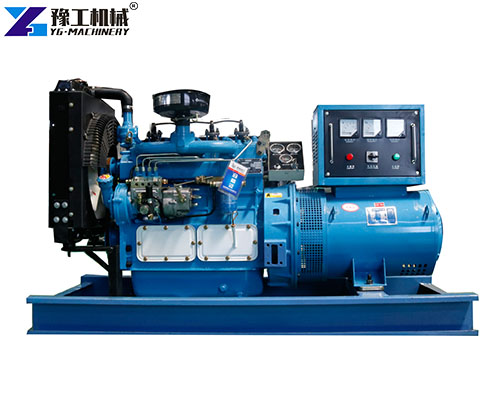
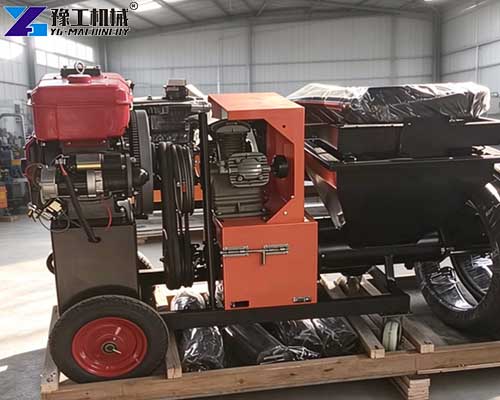
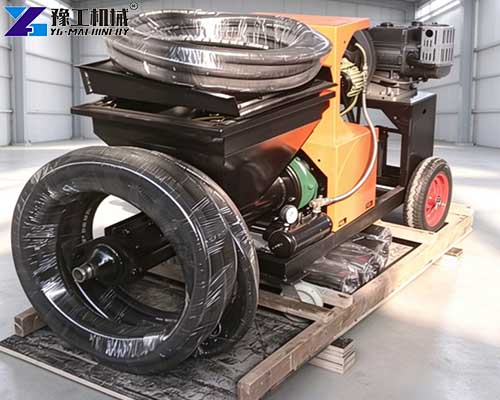
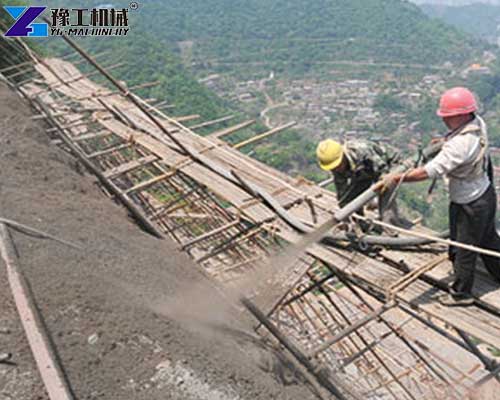
Some projects have no electrical supply at all. Rural infrastructure, pipeline corridors, and temporary construction camps fall into this category. The YG511 mortar sprayer solves the problem with an 8HP or 12HP diesel engine, delivering 3–4 m³/h at a maximum working pressure of 3 MPa. No cable, no generator, no electrician required. The 12HP configuration extends horizontal reach to 60 meters and vertical reach to 40 meters, matching the electric models on distance while removing the power constraint entirely.
The trade-off is maintenance. A diesel engine adds oil changes, fuel system care, and cold-start procedures that electric motors do not require. In cold weather, the operator lets the engine warm before engaging the pump, because cold hydraulic fluid and stiff mortar resist flow. However, on a site where the alternative is no machine at all, that maintenance burden is the cost of operability. For contractors bidding on remote work, the diesel option decides whether the bid is possible.
The YG311’s 3 mm aggregate limit restricts it to fine-mortar applications regardless of voltage configuration. Contractors spraying coarse sand mixes should select the YG318 or YG711, accepting higher power draw and machine weight as the trade-off for aggregate tolerance.
Customer Practical FAQ
Contractors comparing voltage options ask about power availability, model matching, and the consequences of getting it wrong. The answers below come from our engineering team’s field experience.
A: The YG311 supports 220V electric supply with its 4 kW motor, producing 2–3 m³/h. For small renovation work and short hose runs, that configuration performs well. However, if your project involves continuous spraying across multiple floors or thick mixes at high pressure, the single-phase motor draws more current and risks overheating during extended duty cycles. We recommend confirming your daily output target and hose length with our engineering team before selecting voltage.
A: The motor cannot draw enough power to reach rated pressure. The pump delivers weak flow, thick mortar stalls in the hose, and the motor strains under continuous load. Some units include protection that stops operation, but the practical result is lost output and potential motor damage over repeated attempts. Always match the machine’s voltage rating to the site supply before connecting.
A: The YG511 uses an 8HP or 12HP diesel engine with manual recoil or electric start depending on configuration. In cold weather, let the engine warm for a few minutes before engaging the pump. Once running, the diesel drive maintains consistent output without voltage fluctuation. The 12HP version extends horizontal reach to 60 meters, which matches the electric models in distance capability.
A: Generator capacity matters more than the voltage label. A 7.5 kW motor like the YG318’s requires a generator rated well above the motor’s running wattage to handle startup surge. Undersized generators cause voltage drops that trip protection circuits or stall the motor. Confirm generator specifications with our engineering team before relying on temporary power for continuous spraying.
Factory Supply & Contact
We build mortar sprayers in 220V, 380V, and diesel configurations so the machine matches your site power instead of forcing your site to match the machine. Choosing the wrong voltage costs more than a slow job; it shortens motor life and can stop a project mid-floor. Contact our sales team for a detailed quote and ROI calculation based on your daily project scale. Send your site voltage, floor count, and hose length, and our engineers will confirm the correct configuration before shipment.